The Naturalism Trap: Why Realistic Detail Is Not the Same as Truth
Realistic detail on stage can look convincing yet feel false. Learn how coherence, performance choices and audience attention shape theatrical truth.
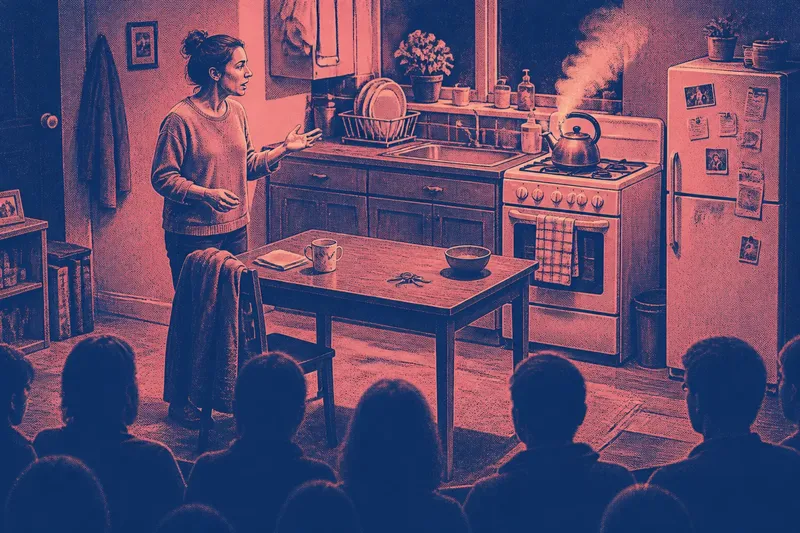
A kettle whistles in a carefully furnished kitchen, but the actor carries on speaking. Realistic detail on stage has established a familiar room, yet the character’s response leaves the audience wondering what kind of world this is. The gap may be deliberate; either way, the useful question is what the performance asks us to believe.
Realistic detail needs a clear relationship to the action
A chipped mug, a coat on a chair or a pause before an answer can evoke familiar life. But familiarity alone does not make a scene convincing. The details, acting and dramatic situation need to belong to a legible set of theatrical rules.
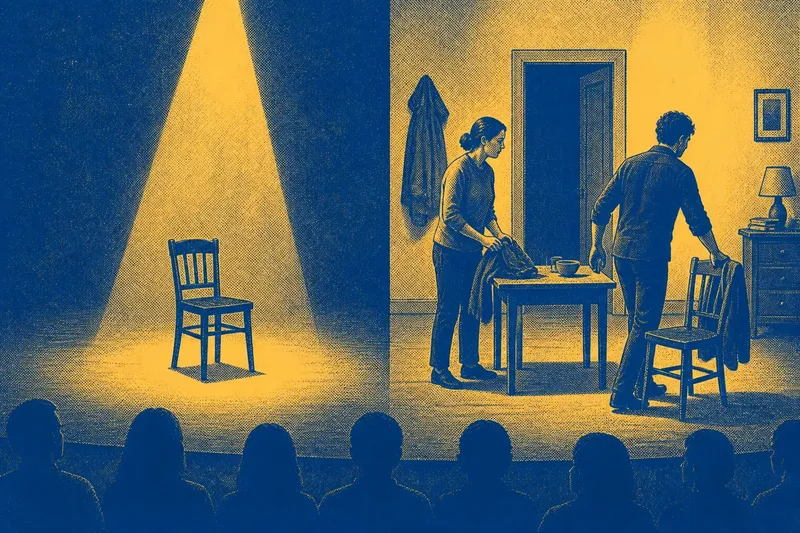
A plain table can suggest a family home if the performers use it as a place for meals, arguments and routines. A detailed table may feel like decoration if the scene gives it no connection to what anyone is doing. Neither choice is inherently more truthful. The question is what the audience is being invited to notice.
When a scene feels false, consider whether its different elements seem to speak the same theatrical language. Does the dialogue imply a cramped flat while the staging treats the room as spacious? Is the set naturalistic while the acting is deliberately broad? A mismatch may be a purposeful contrast, or it may make the scene hard to read.
Acting can be truthful without copying everyday behaviour
Stage behaviour is shaped for an audience. An actor may repeat a gesture, hold a silence longer than feels socially comfortable or speak with unusual precision. These choices can feel credible when they fit the character and the performance’s style. Ordinary behaviour is not the only measure of truth.
Look for whether a choice develops across the scene. If a character avoids eye contact, then meets another person’s gaze at a turning point, the change can carry meaning. If the shift seems unrelated to the situation, it may register as an inconsistency rather than a deliberate turn.
Say you watch an invented scene in which a tenant waits for a landlord’s reply beside a silent telephone. The actor checks the receiver, then stops when a neighbour enters. If the scene has already established that the tenant is hiding the call, the change gives the phone a dramatic purpose. If no such context is provided, the repeated checking may seem like an attempt to add lifelike business.
Sound and timing can make a stage world feel consistent
A distant bus, a radiator’s click or a vibrating phone can suggest a world beyond the stage. The timing matters as much as the sound itself. A noise that arrives without an apparent relation to the action may distract; one that changes how a character responds can sharpen the scene.
Sequence shapes expectation. A repeated knock might first seem incidental, then become threatening after a character reacts to it. The sound stays the same, but its place in the action changes what it means. A simple scrape can also make an unseen movement clear, while elaborate background noise can compete with a quiet exchange.
Listen for the effect rather than asking only whether a sound is realistic. Does it connect the scene to an implied place, change the mood or alter what a character does? If its purpose remains unclear, keep that uncertainty in mind rather than assuming the sound is an error.
Follow the production’s theatrical language?
Does a realistic set make acting more believable?
Not by itself. A familiar room can orient the audience, but the acting still needs to fit the character, circumstances and style. A contrast between set and performance may be intentional; look for what that contrast does in the scene.
Can a bare stage feel truthful?
Yes. A bare stage can put relationships and actions in the foreground without imitating a complete location. Movement, speech and sound can establish the world instead.
What should I notice when a performance feels false?
Look for a mismatch between the style of the setting and the actors’ choices, or between a sound and its timing. Then consider whether the scene develops that mismatch or leaves it unexplained.
Separate useful observation from scorekeeping
It is not worth counting props, cataloguing every background sound or judging each gesture against your own habits. Such scorekeeping can mistake personal familiarity for a universal standard. Instead, follow a few specific moments and ask what the production wants you to understand from them.
For a simple way to do that, check each observation and decide what it suggests:
- If a character changes their behaviour when a sound occurs, treat the sound as part of the action; if nobody responds, consider that it may be atmosphere or deliberate contrast.
- If a pause follows a clear event, watch what the pause changes; if it has no apparent relation to the exchange, leave its purpose open rather than calling it realistic or false.
- If a prop affects where someone stands or what they can do, read it as an active part of the scene; if it does not, consider whether it is background detail or a deliberate visual emphasis.
- If the actors’ style fits the setting’s implied rules, follow the scene on its own terms; if the styles clash, look for a contrast the production develops.
- If repeated behaviour changes as the circumstances change, watch for a developing pattern; if it stays the same, consider whether repetition is the point or simply provides rhythm.
- If a detail draws attention at a turning point, ask what new information it makes visible; if it distracts without affecting the action, set it aside and follow the central exchange.
Notice what stays with you after the scene. It may be a small action rather than a set feature: someone refusing to sit, turning a cup away or wiping a clean surface. Its force depends on how the performance has prepared the audience to see it.
Judge theatrical truth by how the parts work together
Realistic detail is one tool among many, not a verdict on whether a performance is convincing. Ask whether the acting follows a legible style, whether sound and timing shape the scene, and whether the production makes its contrasts meaningful. Realistic detail on stage can orient an audience, but it cannot do all the dramatic work.
When a scene leaves you unsure, hold two possibilities at once: the mismatch may be a purposeful choice, or a break in the production’s logic. Watching what happens next often gives you a better basis for deciding than judging one object or gesture on its own.